
What is Test-Driven Development (TDD)?
Test-Driven Development is a software development approach that emphasizes writing tests before writing the actual code. This might sound counterintuitive, but it’s a powerful way to ensure code quality and reliability. This technique also fits in nicely with shift-left practices of trying to find bugs as early in the software development lifecycle as possible.
Best Way to Reducing Bugs and Improving Code Quality
TDD is my number one hack for reducing bugs and improving code quality: write your tests before your code.
So I’m excited to share with you this essential concept in software development – Test-Driven Development, or TDD.
Whether you’re a beginner or an experienced developer or a software developer in test (SDET) or automation testing engineer, understanding TDD can significantly improve your coding practices.
Let’s get started!
Join the FREE TestGuild Private Community
The TDD process typically follows these three steps
1. Write a Test
Begin by writing a test for a new feature or piece of functionality. The test should fail since the feature hasn’t been implemented yet.
2. Write the Code
Next, write just enough code to make that automated test pass. This keeps your coding focused and purposeful.
3. Refactor
Finally, refactor the code while keeping the test green. This means it still passes after the changes.
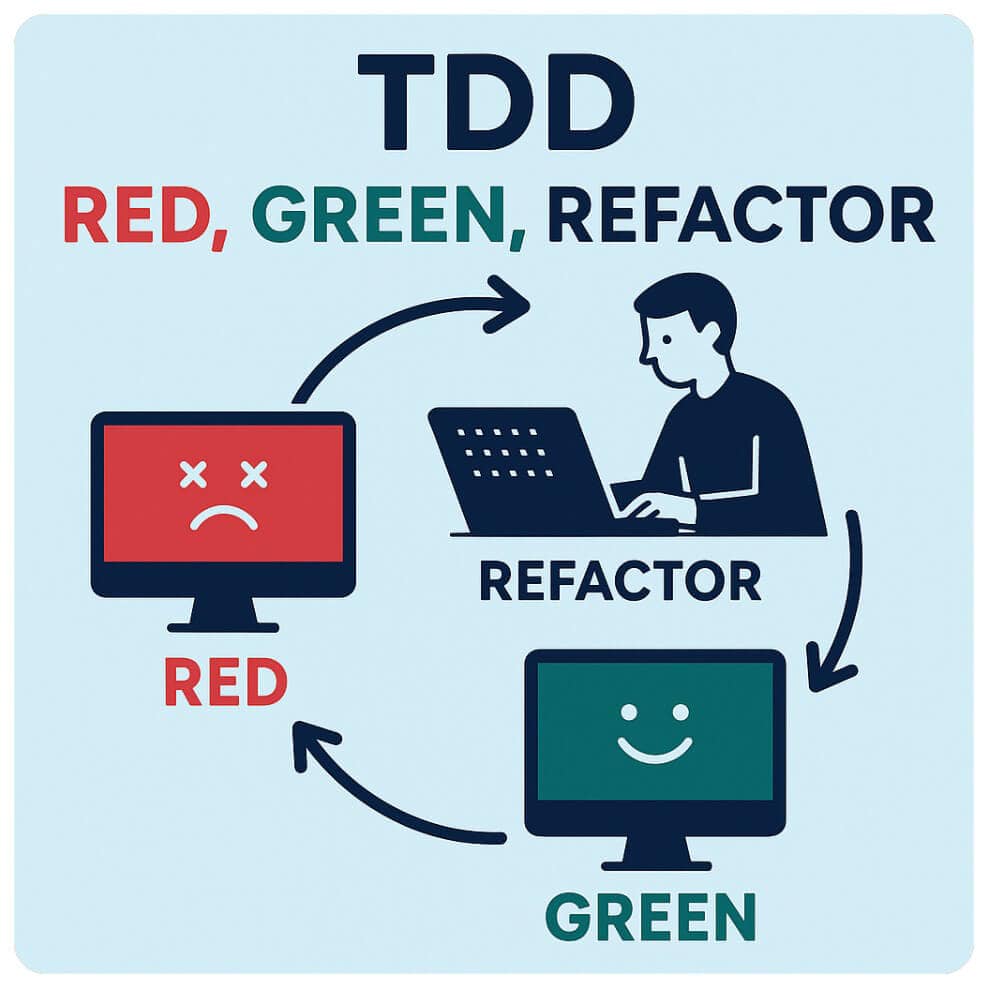
Expert TDD Advice: Scott Nimrod and expert developer also shared his enthusiasm for TDD, describing it as a structured and focused way to develop software. He referred to the “Red, Green, Refactor” cycle as a flow that keeps him locked in and focused, likening it to having tracer bullets guiding him toward his destination. For him, TDD is not just a methodology but a mindset that ensures precision and clarity in development.
– Scott Nimrod
Benefits of TDD
Here are some key benefits of adopting TDD in your development workflow:
Improves Code Quality
Since you’re writing tests first, it helps you think about edge cases and requirements upfront.
Reduces Bugs
With a solid suite of tests, you’re less likely to introduce new bugs when making changes.
Enhances Design
TDD encourages better design decisions as it forces you to consider how your code will be used.
Expert TDD Advice: Brendan Connolly a Director of Quality Engineering highlighted TDD as a practice that flips traditional development on its head. He explained that TDD forces developers to create a failing test first, which shifts their focus to the end result of their code and how it will be utilized. This approach ensures that the code is not only functional but also maintainable in the long run.
– Brendan Connolly
Common TDD Misconceptions
Now, let’s address a few common misconceptions about TDD
1. TDD is only for unit tests
While TDD is often associated with unit testing, it can be applied at various levels of testing. Including functional testing.
Want to see this in action?
Unlock exclusive access to Brendan Connolly’s Test-Driven Testing video training — a powerful deep dive that shows testers how to apply the “Red-Green-Refactor” cycle to their own testing process. Learn how to sharpen your focus, reduce noise, and turn TDD principles into a practical, tester-driven workflow.
Enter your email below to watch the full video and level up your testing skills.
2. TDD slows down development
Initially, it might seem like it takes longer, but in the long run, it saves time by catching issues early.
Another confusion many testers have is what’s the difference between TDD and BDD. For that check out my article on What is Behavior Driven Development (An Introduction)
Expert TDD Advice: TDD isn’t just for unit tests. Use integration tests—like those with Testcontainers—as part of your development loop to get fast feedback and validate real interactions. Group them alongside unit tests in your project and run them constantly during development. With features like reusable containers, startup overhead becomes negligible, making integration testing a natural part of your TDD workflow.
–Kevin Wittek Sr. Engineering Manager @ Docker | Testcontainers Maintainer
Should you Use TDD in your SDLC?
I think so.
Test-Driven Development is an awesome practice that, when implemented correctly, can lead to cleaner, more reliable code.

Joe Colantonio is the founder of TestGuild, an industry-leading platform for automation testing and software testing tools. With over 25 years of hands-on experience, he has worked with top enterprise companies, helped develop early test automation tools and frameworks, and runs the largest online automation testing conference, Automation Guild.
Joe is also the author of Automation Awesomeness: 260 Actionable Affirmations To Improve Your QA & Automation Testing Skills and the host of the TestGuild podcast, which he has released weekly since 2014, making it the longest-running podcast dedicated to automation testing. Over the years, he has interviewed top thought leaders in DevOps, AI-driven test automation, and software quality, shaping the conversation in the industry.
With a reach of over 400,000 across his YouTube channel, LinkedIn, email list, and other social channels, Joe’s insights impact thousands of testers and engineers worldwide.
He has worked with some of the top companies in software testing and automation, including Tricentis, Keysight, Applitools, and BrowserStack, as sponsors and partners, helping them connect with the right audience in the automation testing space.
Follow him on LinkedIn or check out more at TestGuild.com.
Related Posts

What is an SDET? An SDET (Software Development Engineer in Test) is a software engineer whose main job is building […]

Short answer: Grok Bot found a real bug, and it stopped about two inches below the surface. I pointed a […]

A Director of Sales hit me with “AI-DLC” last week like I should already know it. I nodded. Then I […]

Your developers are shipping more code than they were a year ago. Probably a lot more. And your test coverage […]