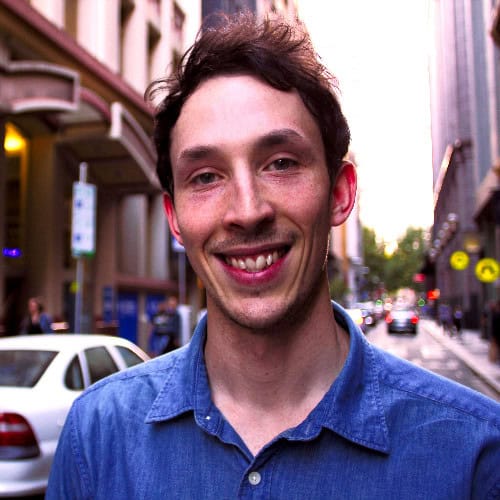
Matt Fellows
Yeah, it's a great question. I don't know if I'd back you go, but like, I think like a lot of people, you kind of get into your own role in all kinds of strange ways back in school. I was a pretty sporty guy actually. I was going to do sports science or exercise in sports science. And you're kind of had a change of heart in the last moment and sort of pivoted towards computer science. But I did play a lot video games in high school. I did a bit of basic coding. I remember, a friend of mine gave me a Debian disk, the physical disk of Debian and I was really excited to install it and I got home and put it in there and I'm like, what is this terminal window thing? Like I was so used to using windows at that point. And so, yeah, I kind of got interested in computers at that point, so I was kind of a weird growing up, like very sporty, but also kind of, a bit nerdy in that sense. And then, last met like many people. You didn't really know what you wanted to do at that age. I'm sure it's that's still common. I ended up doing a double degree in computer science and cognitive science, so a bit of a strange one. Back then, this is 20 odd years ago, that was sort of trying to put together, effectively artificial intelligence. It's like take the human brain, take the computer capabilities and try to make something intelligent out of it. Of course, things have moved on a lot since then. But then straight out of university, I got a job. Doing web development and did that for quite a long time, about 10 years, ran a team there, and I really just wanted to get back into, you eventually get far away enough, you become a manager, and I wanted to really get my hands back in the weeds, so I did some consulting. And that's where my first consulting job, actually, I came across PACT. It was a pretty new thing, and I'd use it on this client, and it was a very transformative project, actually, it was out at Australia's largest job board over here called Seek, a fantastic company, and we sort of did this called DevOps transformation, went from monolith to microservices. This is circa 2014. And we took their first product and took it to the public cloud onto Amazon. And we went from deploying once every couple of months, really painfully, to literally, we could hit a button, push the code, seven minutes later, it was in front of a customer. And I still remember like in Melbourne, with the sort of head of the Australian division was walking around and we did a bit of a walkthrough of what we did. And we'd like to build lights, the old school things. And we got him to actually sit down and make a change to the homepage of the application. And he just had no idea what was going on. Like it's seven minutes, it's like, I don't understand. Is this like a test environment was like, no, that's production, you're in production. And so that kind of really helped cement fast continuous delivery type activities in that company. And it was very formative for me in my consulting journey. That's when I got involved with PACT. I thought it was a great tool, but of course, like many open source things. It needed a lot of work. It was pretty rough around the edges. I started maintaining it at that point. They're about 10 years ago and have been involved with PACT ever since. In terms of the question, how do we build a company and how did that happen? I liken it a little bit to boiling a frog. It sort of gradually happened. Again, when I was at the consulting company, we do a lot product development, like the very product focus, lean startup, that kind of thing. Like let's iterate, get things in front of users, get feedback and go from there. And I guess you work for enough customers and companies and you get frustrated at some of their decisions. You're like, I want to have to make that decision. I want skin in the game. And we worked with the directors of DiUS was a company and they're a great bunch of guys and a really, really good company, very supportive of this. We kind of gradually, introduced it just a free plan where you could sort of host these contracts. And yeah, it's kind of the rest is history. A lot of people started using it. We got a bit more investment from DiUS to help us to build it and yeah in 2022, we got a knock on the door from SmartBear and as we say, yeah, the rest is history.








 August 7, 2025
 37 min 02 sec
 Full transcript
 Hosted by Joe Colantonio