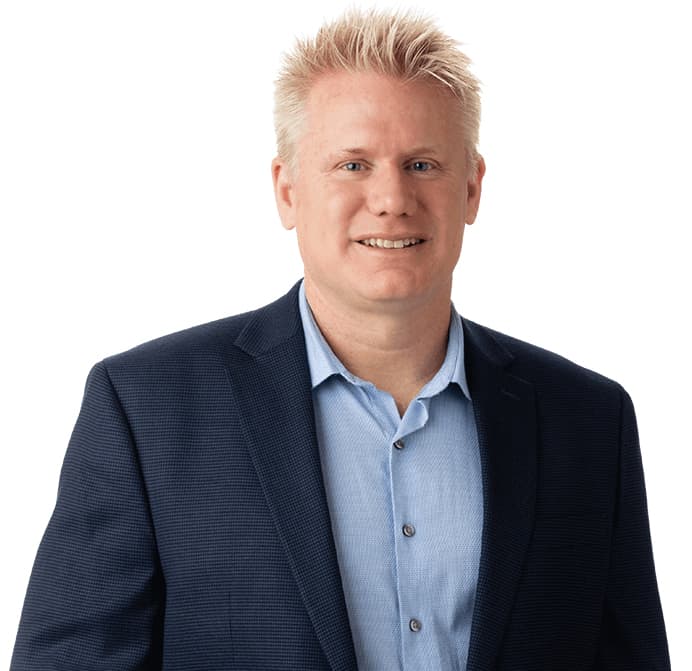
Christian Espinosa
Yeah. The secure methodology is the 7 overarching steps I came up with to develop people skills and to help people have a path to develop people skills. I think one of the challenges with high-tech or high-IQ individuals is there's a lot of stuff out there about emotional intelligence, but there's not like a clear path. So I try to provide a clear path for those 7 steps and I'll briefly go over those steps. The first one is awareness. I think everything starts with awareness that it's not just awareness of everybody else, it's awareness of ourselves. And in the book, I talk a lot about neurolinguistic programming because my audience is, programmers and high-tech individuals. A lot of people fail to understand is we're very programmatic. Our brains have these neural pathways. That is basically like a program that runs, and often that program is not serving us. So we have to have the awareness to realize this program isn't serving us. I need to control C or stop that program and then run a different program, and eventually, that new program will become the default program. An example of that is like one of my engineers, if somebody asked him a question, his program was to start getting defensive. That's what he automatically ran. Where is a better program would have been? Maybe I should be curious why they're asking me questions or what I didn't quite explain right. And that would change his approach to that situation. So that's awareness. The second step is mindset. I'm a believer that there are two types of mindsets. Carol Dweck wrote a book about this. There's a Growth Mindset and The Fixed Mindset. And if you have a fixed mindset, you kind of just believe you're just the way you are. Your brain is hard-wired and you can't learn anything new, which a lot of people will say, I'm just not good with people. And when you constantly tell yourself that it's a reinforcement, that means you have adopted a fixed mindset and you don't think you can get better with people, which is the growth mindset. Believing that our traits are not fixed, we can develop new traits and new habits and we can rewire our brain basically. The third step is acknowledgment. One of the things I realized as a leader that I had a hard time acknowledging myself. I remember in 2015, I finished the Ironman World Championship in Hawaii, and 10 years before that, I stood under the finish line as a spectator, telling myself I'd do that race one day. And when I finished it, I never once like congratulated myself. Automatically thinking about the next big thing to accomplish. And I realized that if I could acknowledge myself that I was having a hard time acknowledging my staff, which is a leader. Your staff wants to feel understood and appreciated. That was a big shift for me. And then the fourth step is communication. With communication, I'm a believer that the meaning of communication is the response you get so that shifts the ownership back on you to alter how you communicate with someone if they're not responding in the way you want. And in cybersecurity and other high-tech industries, we often say that people don't understand what we're talking about, and we just blame the other people versus maybe we should alter how we're communicating. I think that is a big issue in a lot of tech industries. People talk over other people's heads and we wonder why we don't make progress. And step five is Mono-tasking. Mono-tasking is a little bit controversial. Mono-tasking is the antithesis of multitasking. Is doing one thing with concentrated effort at a time. So that means if I'm programming, for instance, I turn off Slack, I turn off my cell phone. I don't do anything but work on that specific function of the program, for instance. And I'll do that for maybe an hour. The next hour, I'll do something different. We get much more done when we monotask than multitask because when we multitask, we have to constantly switch from one task to another one. That context switching causes us to lose efficiency and actually mix up the tasks we're working on. The other thing that mono-tasking helps with is presence. If I'm mono-tasking when I'm with somebody or communicating, I'm not thinking about something else. I'm not checking my phone. I'm going to be a much better communicator because I'm going to be paying attention, and the person is going to feel better when they're around me because if I go to dinner with someone, they're constantly checking their phone. I don't feel very good about it. I'm like, I just want to leave, right? But we constantly see that. Like, I went to dinner that day with my girlfriend and a couple across a restaurant. They were both just on their phone individually, not even communicating with each other like who are they texting? And then step six is empathy. I think in our society today, it's very hard to be empathetic because there's so much division. We like to focus on the differences. If we constantly focus on the differences like they're the engineers, we're the salespeople, they're the managers, they're the Democrats, and they're the Republicans or provacs or anti-vax. It's hard to see the similarities in us. And when we don't see the similarities within us, it makes it challenging to be empathetic. Last year in February, I had some in my left leg and I had to go to a hospital. And this is an example of empathy. I'm the patient. The doctor's the doctor, and the doctor delivers the news to me about these blood clots. And I asked what it meant. Instead. It meant I could die, which is pretty like not good to hear or have a stroke at any minute. And I was kind of freaking out about it because I was there by myself. And then he said, he just said to me the kind of dismissive way he said, don't worry, I see this all the time. I think he was trying to be pathetic. But I responded, well, I just wanted him. I was like, well, I don't, this is a first for me. I think in his mind he was trying to be pathetic. But what he failed to understand, which I think is really the issue with empathy, is I'm a fellow human being. He was looking at me as a patient and him as a doctor, and that's how he was kind of approaching this situation versus this is a pretty bad news, somebody's got maybe we should approach this situation a little bit differently. And then the last step is Kaizen. So Kaizen is a Japanese word that means continuous and never-ending improvement or can I? And the thing about Kaizen is mastery is a journey. If we start any of these steps I've already talked about, we're not going to get it right the first time, probably not the second time. And if we adopt the mindset of Kaizen, we just have to realize that as long as we're making improvements, that's what matters. Adopting that mindset of Kaizen gives you the courage to start something because a lot of people will start something and then it doesn't work. And they're like, well, I'm just going abandon it. And then they'll just say, that doesn't work for me. But if you adopt a mindset of Kaizen, you realize you have to get worse before you actually get better at something. And as long as I'm taking those steps, I'll accomplish quite a bit in three years, even though I couldn't do it in a week. So it's that incremental improvement.








 March 7, 2024
 32 min 24 sec
 Full transcript
 Hosted by Joe Colantonio