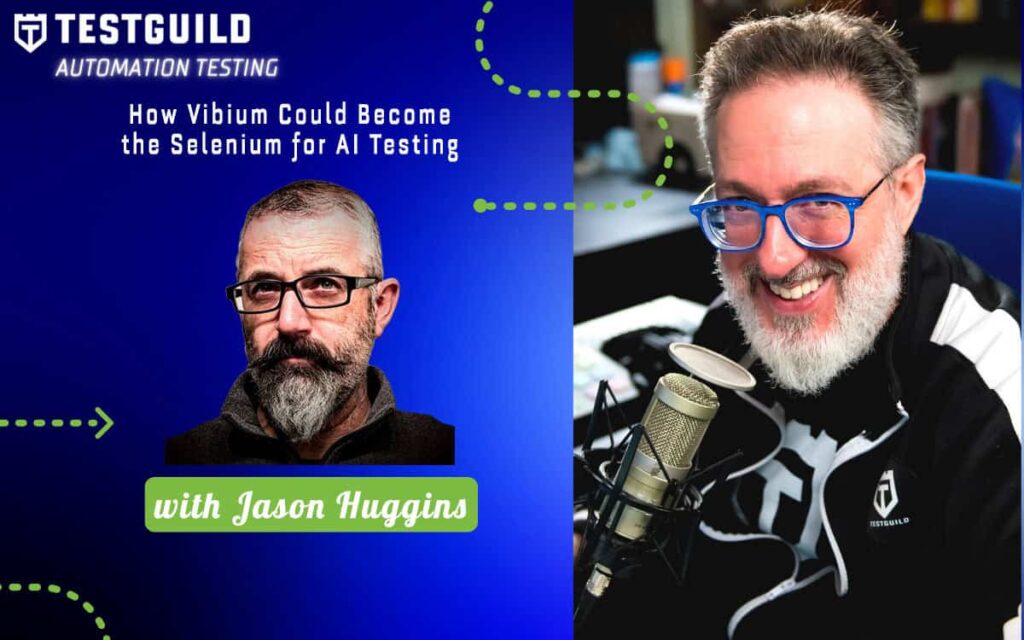
Jason Huggins
MCP, Model Context Protocol. That's not even a year old. Some people are saying that is the thing that will be the merger between the AI and all of the things. There's a Playwright MCP. There's Selenium MCP that Angie Jones made, which is amazing. I talked with the developer at Stripe, and we were talking about the MCP stuff, and he said, oh yeah, but it's expensive. I was like, oh, yeah, I know, man, the tokens and it's expense. He's like, no, no. Time. Say more. And it's like, no, no. If you have the LLMs, even if you have a crazy, ridiculous $30,000 rig on your desktop, which actually is literally financially expensive, it still is slower. And when you're at a scale like Stripe, asking the AI to do literally everything, like open the page, do a thing, click a button, look for a button. Like that's the thinking thing. Click the button. I'll have to think about how to click. If every interaction back and forth is back and forth over the MCP channel. It is expensive in time. This is my opinion and I could be wrong because I'm not an MCP server. Like who am I? I'm just like the argument is that I don't think MCP will rule the world unless either they get the time down to zero or LLMs, some people are making the bet that actually LLMS will just keep getting faster and faster and faster. Like, yes, they are slow, you have two cosmic problems, they hallucinate. There's a making a stuff up problem. And then there's like a slow problem. And everyone is kind of assuming that there's some kind of vague Moore's law about AI that they'll get like smarter, less hallucinating, and just faster, full stop. But there's also a thing where you can kind of like, well, actually, especially in software testing determinism is still kind of a thing that we would prefer to have, whatever. And also fast is still kinda a thing. And if there's like some obvious ways, we can kind of actually just, we don't need to ask a robot to do it because we could just see the button on the screen and I know the coordinates for it. I'm just going to click it over a protocol. I don't have to like have a round trip through a robot to confirm what I can already see. I hope I'm making sense here, but basically like what I'm doing with Vibium is that we'll be talking to the web, like driving a browser of the web driver protocol, and occasionally when you get stuck. Now, with WebDriver, it just bombs out and says, element not found, good luck, have a nice day. That's what everyone actually makes them bail out on WebDrivers saying, screw you guys, I'm out of here. Then you go down and download Playwright, and then it'll say, hey, I don't see the element, but like, hang on. And then you play like the elevator music, and it's like, and then shows up like, oh, hey the button's ready, and you continue. But if you were, extending my metaphor here. T here might be some situations where no matter how long you wait, that element is not going to show up. Like you're just kind of stuck. And that's where potentially you fall back to an AI and say, Hey, I'm stuck, but I might not necessarily want to fail the test cause really actually. This is where I kind of get into the stuff that no one knows about, but this is the thing that might actually be the first version that gets released. The reason why I'm kind of talking about stuck, I use this metaphor of like, if you ask Google Maps to get you to the store. Occasionally as you're driving, it'll say, Oh, Hey, there's a traffic stop or I found a faster route or whatever. It will, in real time tell you there might be a better way to go. And I don't think, well, in a modern context, anyone's really kind of is doing, sorry, take this back. People are working on this. I'm now working on. There's this idea. It's actually an old idea that I'm now bringing back. Another way to summarize what the heck is Vibium. It's really two things. It's at a lower level. There's going to be a library that you can download. It implements the WebDriver spec, WebDriver BiDi spec, it's going to be JavaScript and Python and based on all my survey responses, probably Java, because that's actually huge at a low level. At the high level, we're taking an old idea that's been around forever in academia, but it's never really had its moment in the sun. But I think it will. I'm gonna try to give it its moment and the sun model based testing, like there, it's a kind of a wonky academic thing. I'm rapidly coming back up to speed on this stuff, but it's basically this idea that if you map your app, the automated tests actually just fall out of it. You have it's graph, it's a really kind of wonky stuff. So people accuse me of like, I'm just trolling the internet, there's nothing. It's like, oh my God, there is so much, there are so much stuff that we have to get up to speed and learn on me specifically, but all of us collectively model-based testing works. But it's fatal flaw is that it's tedious and very manual labor intensive to create the model of your app. Because the second you do that. You say, here's these pages and they're connected over things. It's all graph theory, nodes, and edges. You have two nodes. So you have two pages. You have a login page is one node and you have a checkout page on the other one. And they were connected through intermediary other nodes. It's all nodes and edges and those edges and like the academic term that they would use is like a click or a submit button, like there was an action you took to go from one node to the next, right? My metaphor going back to Google, I want what I want Vibium to be is kind of like, I've used this other metaphor and I'm just throwing them out today. Waymo for web apps. Right? So you just get in the car, robot takes the wheel and drives you to the store, right? That's what we want for testing. I want the metaphorical equivalent way, but waymo more for web apps means I want to like go to my laptop as Mr. President business CEO and say, can people buy stuff on my web store? That's the question I want to ask. And just like you would ask Google drive, drive me to the store. What I want for software testing is can people still buy stuff, granted that is probably triggering for a lot of people because what I would say though, is I'm because, cause like, wait a second, no, but like, we actually have to verify that the button is blue. Like all kinds of weird things actually have to happen. I would argue I am adding a new layer to the testing pyramid. And so I'm like, I know I'm triggering to a bunch of people, but I'm also saying there's a new kind of testing that can exist now. It's basically like end to end testing, but like lazy mode, advanced lazy node that you can just kind of say, putting my marketing hat on. Of a marketing phrase like vibe coding that was also only coined last February. It seems like it's been around forever, but it's only this year. It's just as good of a market term as cloud computing, nothing has been, it's equal since the phrase cloud computing. And so as far as a way to communicate whatever is going on with the AI world and the merger of AI and coding, being able to communicate to your friends and family at like Thanksgiving table. It's a phrase that kind of breaks through if you're driving down like the 101 freeway and you see a bullboard it's probably going to have the word vibe coding on it or vibe something right.









 September 7, 2025
 31 min 04 sec
 Full transcript
 Hosted by Joe Colantonio