







 February 3, 2019
 Hosted by Joe Colantonio
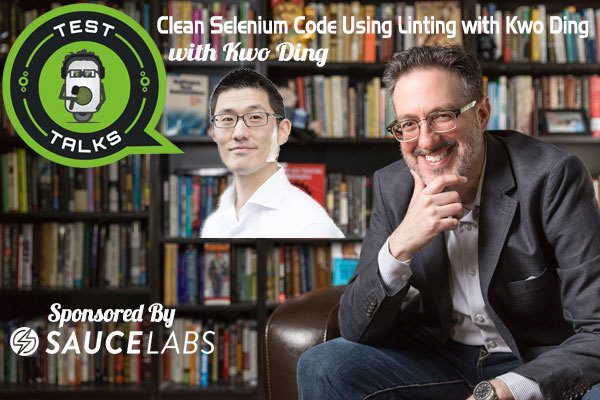
Today we’ll be test talking with Kwo Ding all about his new Sonar WebDriver Plugin which is a static code analysis tool that helps you to follow best practices for writing WebDriver tests. If you're interested in writing clean Selenium code, you don’t want to miss this episode.
Automation Testing Podcast Automation
239: Clean Selenium Code Using Linting with Kwo Ding

with Kwo Ding
hands-on test automation architect/consultant with 10 years · experience in software testing
February 3, 2019
Hosted by Joe Colantonio
About this episode
Quotes & Insights from this Test Talk with Kwo Ding
- Linting, In my opinion, is that a code analysis. So whenever you write code. So in this case test code, it gets analyzed either you push it to a repository or even instantly while you're writing the code. So basically just analyzing whether you are following good practices or tif there are any bugs in your code while writing.
- I was inspired by a talk from Dave Hafner at SauceCon I think at the beginning of this year. Where he talked about flaky flakiness of test and that we should focus more on utilizing tools we have in order to reduce the flakiness of your test
- I've seen a lot of test code and been analyzing that and there are so many types of best practices and these are very very good and very valuable because we should follow the best practices. So actually I started to write this plugin just to save myself a lot of time in analyzing test code especially the basic stuff like. Okay. You know you have test classes that contain your test and you have non-test classes such as page objects. For example, they should not contain assertions and there is one of the checks that the plugin is doing. Other things are using implicit and explicit waits and hard hardcoded sleeps and that we should not have done and we should handle it in a better way.
- It really started about saving myself a lot of time by getting rid of these basic checks so I don't have to do it manually or look at them manually. So the tool will just give me that feedback and it will produce OK on which line it's not following this best practice. It will give you a compliant code example opposed to the non-compliant code that was detected.
- I think it's good to highlight that it's really a gap I've seen in the testing industry that we should aim for more or faster feedback in the SDLC. Because there are so many tools coming out that are similar as in how to execute a test but fewer tools about how to get even faster feedback like static code analysis on test code.
Keep listening
Related episodes

Automation Testing Podcast · Ep. 612
Robot Framework Test Automation: Automate Web, Desktop, Mobile, and Embedded Systems
What makes Robot Framework flexible enough to test medical devices, low code bots, monitoring systems, and embedded
Nov 17

Automation Testing Podcast · Ep. 611
Playwright at Scale: Run 500 Tests in Minutes with Oliver Stenbom
with Oliver Stenbom
Is your Playwright suite slowing you down instead of speeding you up? In this episode, Oliver Stenbom,
Nov 10
Automation Testing Podcast · Ep. 610
How to Prove Your Release Is Ready When AI Writes the Code
How to Prove Your Release Is Ready When AI Writes the Code? Can you prove your software is ready to ship, or does that answer still depend on a meeting and a spreadsheet? Want to see if your team can prove a release is ready? Book a custom LoopIQ demo with Ashwin: https://testgld.link/loopiqdemo In this episode,
Nov 3

Automation Testing Podcast · Ep. 609
Why Your AI Tests Pass When Your Features Fail with Donovan Brady
with Donovan Brady
Why Your AI Tests Pass When Your Features Fail? Donovan Brady of Leapwork shows how to make
Oct 27