







113: Why We Needs More Women & Minorities in Tech with Angie Jones
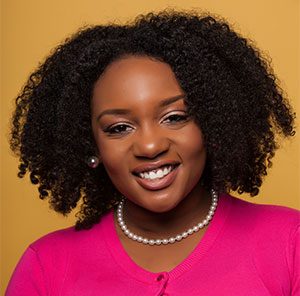
with Angie Jones
Consulting Automation Engineer at LexisNexis who advises several scrum teams on QA Automation strategies and best practices and has developed automation frameworks for countless software products
 July 31, 2016
 Hosted by Joe Colantonio

About this episode
Today we’ll be test talking with Angie Jones about why we need more women and minorities in tech, as well as automation with Java. Angie is a consulting automation engineer at LexisNexis and an inventor with more than 20 patented inventions. On top of all that, she has been featured in Ebony magazine as one of the country's top young leaders under the age of 30, you definitely don’t want to miss this show.
Quotes & Insights from this Test Talk
- A lot of companies are currently saying that they are looking to more diverse and recruit more diversity in their workforce but it's really frustrating because you don't see those numbers increasing at like the top companies actually in Silicon Valley. There was recently a lot of flack given to Facebook because their report came out, third year in a row, after they have committed to increasing diversity and yet the numbers are staying the same. My advice as a woman of color on how to go about solving that is to go where the talent is. I don't see the companies engaging much with historically black universities or universities that serve Hispanics or other minorities. I don't see their presence there. This is where your talent is going to be. This is where the students are being trained to become computer scientists and engineers so that's a start right there, just recruiting and going where the talent is.
- There's a lot of organizations that are focused on training girls and women and people who are minorities and training them to get into technology. These are other resources that these companies can work with. For example, I work with Tech Girls which is an organization which caters to middle school girls in trying to get them interested in technology and is a direct answer to what happened and what occurred in the 80s when there was a drop and how it kind of painted a picture of it being a boys club. This is our response to that and letting girls know that there are cool and innovative things that they can do with technology as well. We find that's where we're losing them, about the middle school age.
- Me, as a black woman, when I go and interview at a company, I'm looking at the panel of people that the company has put in place to interview me. That has a very profound impact on whether I'm going to accept that job or not. If it's a panel of a bunch of white guys who all look the same and think the same, then, more than likely, I'm not going to want to work there. I'm not going to accept an offer if one is extended to me. I'm making sure that there are women who work here, women that are valued enough that you are sending them to interview potential employees. That there are people of color here.
- I feel like, as women and as minorities, we are all about talking about it. We almost have a pass to do so. Yeah, sometimes I want to engage in these conversations with the white males that I work with but it's clear, if I bring it up, that they're uncomfortable so I kind of just let it go. I think if you come from a place of honesty, it's okay to talk about this. This is the reality. This is life. It's okay to talk about our differences and our world views and our perceptions. That's fine.
- My background and my life is much different than that of a white male so I'm going to bring a unique perspective. I'm going to bring a unique solution to the problem. I'm going to bring something that's appealing to other women and to other minorities. That's why it's so valuable. Until companies realize that and see the value, that's what I try to bring as a black woman in technology, making sure that I'm contributing value so that they see this and know, hey, we need more like her.
- I guess my one piece of advice, it's probably the most important piece, is to just acknowledge them. Acknowledge their presence. Acknowledge their contributions. Value them. Let them know that you want them to be there, you need them to be there. It's not just a diversity check mark that you're trying to get but you value what they bring to the table as a person, as a technologist. We really just want to be treated like everyone else and not ignored or be thought of as you're lowering the bar to bring us in. Just treat us like a technologist.
Resources
- When women stopped coding (NPR Podcast Episode)
- Software engineer Angie Jones talks technology, Black culture, and Diva Chix
- Black Girls Code
- Java For Testers – Alan Richardson Book
Connect with Angie Jones
- Twitter: techgirl1908
- Blog: angiejones.tech
- LinkedIn: angiejones
May I Ask You For a Favor?
Thanks again for listening to the show. If it has helped you in any way, shape or form, please share it using the social media buttons you see on the page.
Additionally, reviews for the podcast on iTunes are extremely helpful and greatly appreciated! They do matter in the rankings of the show and I read each and every one of them.

Test Talks is sponsored by the fantastic folks at Sauce Labs. Try it for free today!
Keep listening
Related episodes

Automation Testing Podcast · Ep. 609
Why Your AI Tests Pass When Your Features Fail with Donovan Brady
with Donovan Brady
Why Your AI Tests Pass When Your Features Fail? Donovan Brady of Leapwork shows how to make
Oct 27

Automation Testing Podcast · Ep. 608
Scary Test Automation POCs Made Easy: Halloween Special With Paul Grossman
with Paul Grossman
Running a proof of concept on test automation tools can feel like a horror movie. Vendors promise
Oct 20

Automation Testing Podcast · Ep. 607
Locust and Azure Load Testing: Create and Debug Load Tests with AI with Lars Holmberg and Abhinav Premsekhar
with Lars Holmberg and Abhinav Premsekhar
Performance testing has never been easier to start, or more important to get right. As teams ship
Oct 6

Automation Testing Podcast · Ep. 606
AI Agents Passed the Tests. Real Devices Didn’t. with Nick Metcalfe
with Nick Metcalfe
Cloud device farms make it easy to get started with real device testing. But what happens when
Sep 29